An asphalt driveway should provide a smooth, stable surface for everyday vehicle access. When dips, depressions, raised areas or wheel ruts begin to appear, they are often signs that something within the pavement has changed. While some unevenness develops gradually through normal wear, other problems can indicate deterioration beneath the visible asphalt.
For homeowners in Labrador, QLD, understanding why an asphalt driveway has become uneven can help determine whether maintenance, repairs or resurfacing should be considered. Labrador Surfacing Solutions provides professional asphalt and bitumen resurfacing with a focus on identifying the cause of deterioration rather than simply covering the visible problem.
Why Do Asphalt Driveways Become Uneven?
An asphalt driveway is made up of more than its visible surface. The asphalt relies on properly prepared and compacted pavement layers beneath it to provide stability and distribute vehicle loads.
When these supporting layers move, weaken or settle, the asphalt above can follow that movement.
Common causes of uneven asphalt include:
- Poor or deteriorating base conditions
- Inadequate compaction
- Water entering the pavement
- Drainage problems
- Repeated vehicle loading
- Ground settlement
- Age-related deterioration
- Weakness around driveway edges
Determining which of these factors is responsible is important before deciding how the driveway should be repaired.
Settlement Beneath the Asphalt
One common cause of depressions is settlement within the pavement or ground beneath the driveway.
If supporting materials compact further over time or an area of the foundation loses stability, the asphalt above may gradually sink. This can result in isolated depressions or larger uneven sections.
Settlement can become particularly noticeable where vehicle tyres repeatedly travel or park in the same locations.
Poor Initial Compaction
Proper compaction during driveway construction helps create a stable foundation. If sections of the pavement have not been compacted adequately, they may continue compressing after the asphalt has been installed.
Over time, regular vehicle loads can expose these weaknesses.
Signs can include:
- Localised sinking
- Uneven wheel paths
- Surface cracking around depressions
- Sections that appear lower than surrounding pavement
Simply adding material over the top may not provide a lasting result if unstable pavement remains underneath.
Water Can Weaken the Pavement
Water is a major contributor to asphalt deterioration. Cracks, poorly drained edges and areas where water regularly pools can allow moisture to affect the supporting pavement.
Once the base becomes weakened, vehicle loads can cause movement and deformation.
This is why an uneven driveway often needs to be assessed for both pavement condition and drainage. Fixing the surface without addressing persistent water problems can allow the same deterioration to return.
Poor Drainage Can Create Low Areas
If a driveway does not have appropriate falls, rainfall may collect rather than drain away efficiently.
Standing water can highlight existing depressions while also contributing to further deterioration. As the pavement weakens, the low area can become deeper, allowing even more water to accumulate.
Warning signs include:
- Puddles repeatedly forming in the same locations
- Water remaining long after rainfall
- Deterioration around driveway edges
- Cracking around low sections
- Loose material developing near damaged areas
Correct grading and drainage are therefore important considerations when repairing or resurfacing an uneven asphalt driveway.
Repeated Vehicle Loads Can Cause Rutting
Rutting occurs when depressions develop along the wheel paths regularly used by vehicles.
A properly designed driveway should support its expected traffic, but repeated loads can reveal weaknesses in an ageing or inadequately prepared pavement. Heavier vehicles can place additional stress on areas that were not designed for those loads.
Ruts should be investigated rather than simply treated as cosmetic defects because they can indicate movement within the pavement structure.
Turning and Parking Areas Experience Additional Stress
Not every part of a driveway experiences the same type of vehicle loading.
Areas where vehicles regularly turn, brake or remain parked can be subjected to concentrated forces. Over time, these sections may deteriorate differently from straight sections used primarily for entering and leaving the property.
Understanding vehicle movement across the driveway helps identify why certain areas have become uneven while others remain relatively stable.
Driveway Edges Can Lose Support
Asphalt around the perimeter of a driveway requires adequate support. If adjoining material erodes or the edge is repeatedly driven over, the asphalt can begin to crack, sink or break away.
Once an edge becomes damaged, water may also find additional pathways into the pavement.
Early attention to edge deterioration can help prevent the affected area from spreading further into the driveway.
Tree Roots and Ground Movement
Changes beneath the pavement can occasionally cause sections of asphalt to rise rather than sink.
Tree roots or movement within the surrounding ground can place pressure on the pavement from below. The appropriate response depends on the cause and extent of the movement.
This type of unevenness requires careful assessment because resurfacing directly over a moving area may not resolve the underlying issue.
When Is Resurfacing Appropriate?
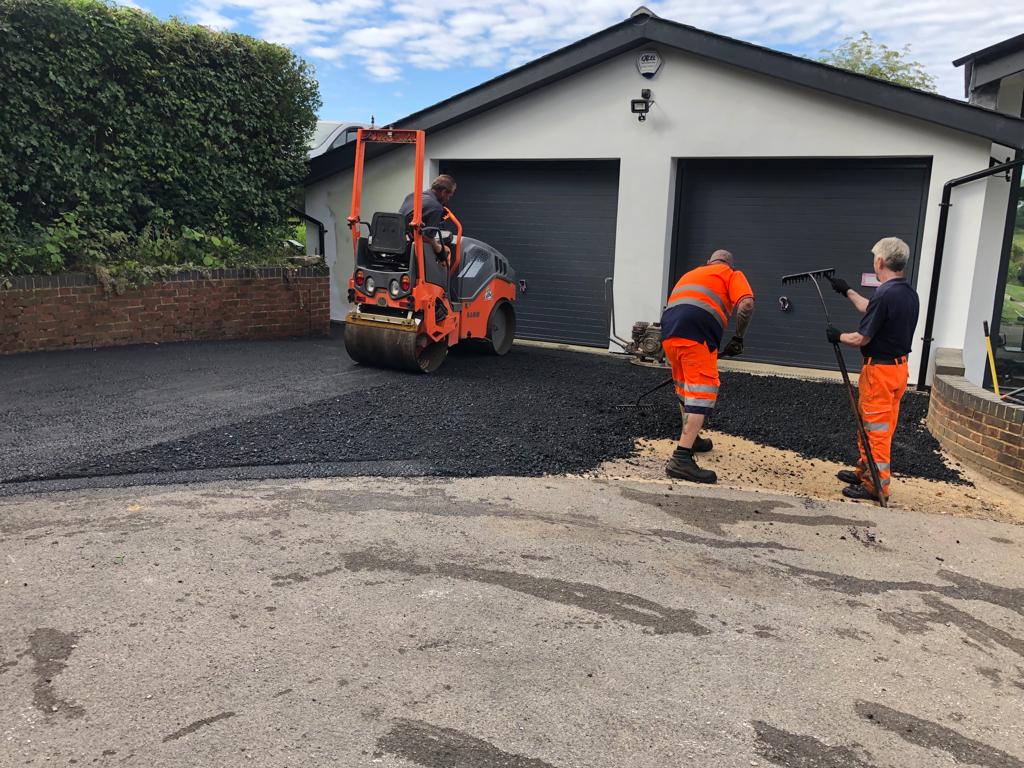
An uneven driveway does not automatically require complete replacement. If the underlying pavement remains sufficiently stable and deterioration is mainly affecting the asphalt wearing surface, resurfacing may be a suitable way to restore a smoother, more consistent finish.
Asphalt resurfacing can help address:
- Widespread surface wear
- Minor irregularities
- Ageing asphalt
- Extensive superficial cracking
- A generally deteriorated wearing surface
However, substantial depressions, unstable pavement and significant drainage problems should be corrected before a new asphalt layer is installed.
Why Simply Covering Uneven Asphalt Can Be a Mistake
Installing fresh asphalt over a visibly uneven driveway may improve its appearance initially, but it does not automatically correct problems underneath.
If the existing pavement continues moving, the new surface can eventually develop similar depressions or cracking.
Professional preparation may therefore include:
- Removing failed material
- Repairing weak pavement sections
- Restoring appropriate levels
- Improving drainage
- Recompacting affected areas
- Preparing the existing pavement for resurfacing
The extent of preparation should reflect the actual condition of the driveway.
Pay Attention to Changes Over Time
Monitoring how quickly unevenness develops can provide useful clues about the seriousness of the problem.
Professional attention is worth considering when:
- Depressions are becoming noticeably deeper
- Water increasingly collects on the driveway
- Cracks are developing around sunken areas
- Wheel ruts are becoming more pronounced
- Previously repaired sections keep deteriorating
- Driving over the surface has become noticeably rougher
The earlier the underlying cause is identified, the more options may be available for restoring the pavement effectively.
Conclusion
An uneven asphalt driveway can develop for several reasons, including settlement, poor compaction, water penetration, inadequate drainage, repeated vehicle loading and deterioration around pavement edges. The visible dip or rut is often only part of the problem, which is why understanding what is happening underneath the asphalt is important before repairs or resurfacing begin.
For homeowners in Labrador, QLD, Labrador Surfacing Solutions provides professional asphalt and bitumen resurfacing based on the existing condition and use of the pavement. If your driveway is becoming increasingly uneven, arranging a professional assessment can help identify the cause and determine the most appropriate way to restore a smoother, more reliable surface.
Call us on: 07 3113 9392
Click here to find out more about Labrador Surfacing Solutions
Click here to complete our contact form and see how we can help with your driveway needs.